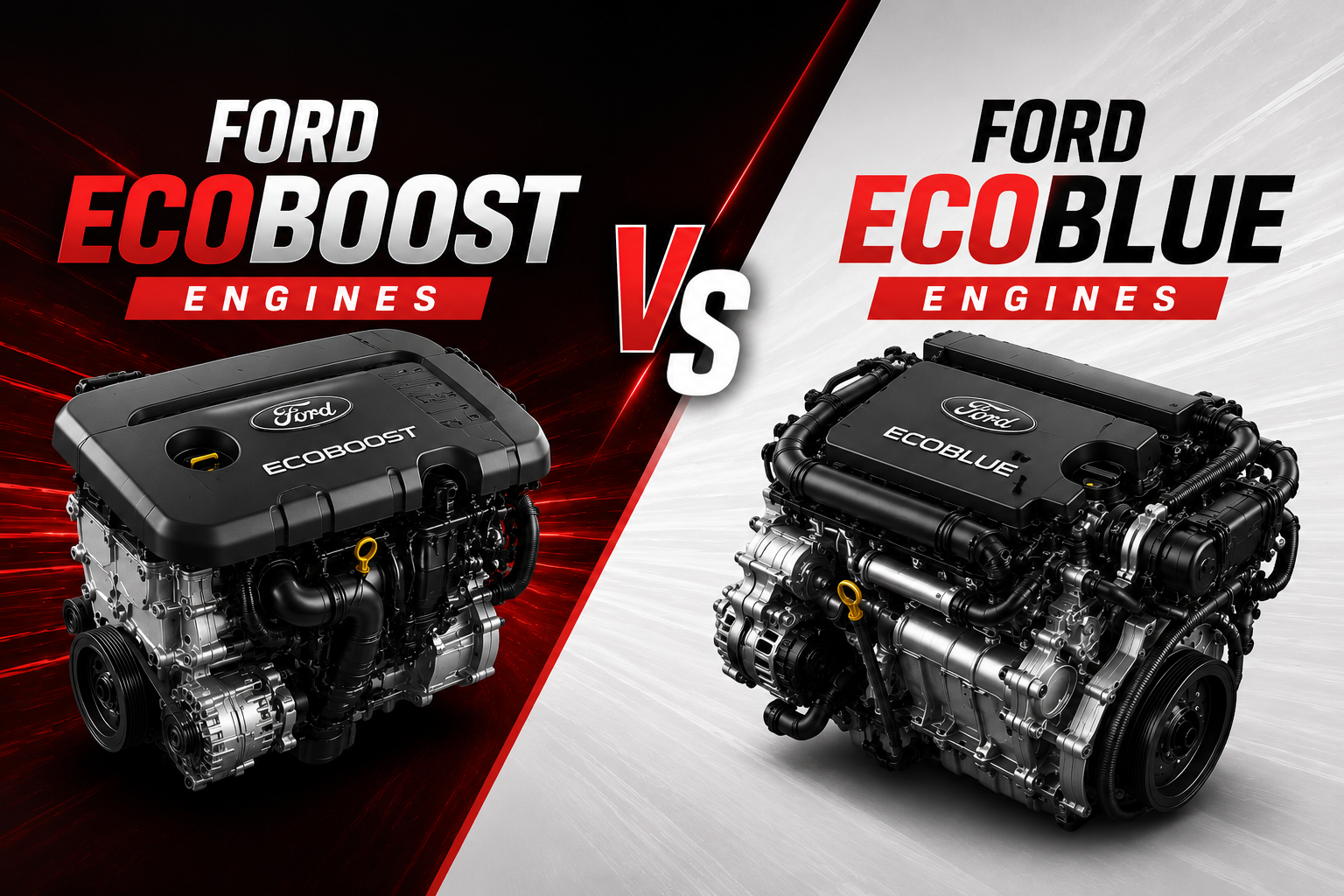
Choosing between a Ford EcoBoost engine and a Ford EcoBlue engine depends on how you drive, your annual mileage, fuel preference, and long-term maintenance costs. At Engines Rebuild, we specialise in Ford engine rebuilds, replacement engines, reconditioned Ford engines, engine repairs, and supply & fit services across the UK. Whether you own a Ford Fiesta, Focus, Mondeo, Transit, Puma, Kuga, Ranger or Tourneo, understanding the differences between EcoBoost and EcoBlue engines can help you make the right decision. This complete guide explains everything you need to know about Ford EcoBoost petrol engines and Ford EcoBlue diesel engines, including specifications, common faults, reliability, replacement costs, fuel economy, maintenance requirements, and frequently asked questions.
What is a Ford EcoBoost Engine?
The Ford EcoBoost engine is a turbocharged petrol engine designed to deliver excellent performance while maintaining impressive fuel efficiency. It combines direct fuel injection, turbocharging, and variable valve timing to produce more power from a smaller engine. EcoBoost engines are particularly popular among drivers who mainly travel in towns, cities, and shorter journeys.
Popular Ford EcoBoost Engines
| Engine | Cylinders | Power | Fuel |
|---|---|---|---|
| 1.0 EcoBoost | 3 | 100-155 PS | Petrol |
| 1.5 EcoBoost | 4 | 150-182 PS | Petrol |
| 1.6 EcoBoost | 4 | 150-182 PS | Petrol |
| 2.0 EcoBoost | 4 | 200-280 PS | Petrol |
| 2.3 EcoBoost | 4 | 280-350 PS | Petrol |
What is a Ford EcoBlue Engine?
The Ford EcoBlue engine is Ford’s latest diesel engine family designed for improved fuel economy, lower emissions, quieter operation and greater torque. These engines are especially popular among commercial vehicle owners and motorway drivers. EcoBlue engines are built with advanced diesel injection technology and improved turbocharging to deliver higher efficiency while meeting modern emissions regulations.
Popular Ford EcoBlue Engines
| Engine | Power | Fuel | Common Vehicles |
|---|---|---|---|
| 1.5 EcoBlue | 75-120 PS | Diesel | Fiesta, Focus |
| 2.0 EcoBlue | 105-213 PS | Diesel | Transit, Ranger, Kuga |
| 2.0 Bi-Turbo EcoBlue | 213 PS | Diesel | Ranger Raptor |
| 3.0 EcoBlue V6 | 240 PS | Diesel | Ranger |
EcoBoost vs EcoBlue Comparison
| Feature | EcoBoost | EcoBlue |
|---|---|---|
| Fuel Type | Petrol | Diesel |
| Turbocharged | Yes | Yes |
| Fuel Economy | Good | Excellent |
| Torque | Moderate | High |
| Best For | City Driving | Long Distance |
| Running Costs | Lower Maintenance | Better MPG |
| Performance | Excellent Acceleration | Strong Pulling Power |
| Towing | Average | Excellent |
| Commercial Use | Limited | Ideal |
Fuel Economy Comparison
| Engine | Average MPG |
|---|---|
| 1.0 EcoBoost | 45-58 MPG |
| 1.5 EcoBoost | 40-50 MPG |
| 2.0 EcoBoost | 30-40 MPG |
| 1.5 EcoBlue | 60-70 MPG |
| 2.0 EcoBlue | 50-65 MPG |
| 3.0 EcoBlue | 35-45 MPG |
Ford Vehicles Using EcoBoost Engines
| Vehicle | Engine Options |
|---|---|
| Ford Fiesta | 1.0 EcoBoost |
| Ford Focus | 1.0, 1.5 EcoBoost |
| Ford Puma | 1.0 EcoBoost |
| Ford Kuga | 1.5, 2.0 EcoBoost |
| Ford Mondeo | 1.5, 2.0 EcoBoost |
| Ford Mustang | 2.3 EcoBoost |
Ford Vehicles Using EcoBlue Engines
| Vehicle | Engine Options |
|---|---|
| Ford Transit | 2.0 EcoBlue |
| Ford Transit Custom | 2.0 EcoBlue |
| Ford Ranger | 2.0 EcoBlue |
| Ford Ranger Raptor | 2.0 Bi-Turbo EcoBlue |
| Ford Kuga | 2.0 EcoBlue |
| Ford Tourneo | 2.0 EcoBlue |
| Ford Focus | 1.5 EcoBlue |
Common Ford EcoBoost Engine Problems
Although EcoBoost engines are reliable when serviced correctly, several common issues can develop over time.
- Wet timing belt wear
- Coolant loss
- Head gasket failure
- Turbocharger wear
- Carbon build-up
- Oil pressure problems
- Misfiring
- Engine overheating
- Water pump failure
- Oil leaks
Many of these faults can be repaired through a professional Ford EcoBoost engine rebuild before a complete replacement becomes necessary.
Common Ford EcoBlue Engine Problems
EcoBlue diesel engines are extremely capable but can suffer from wear if maintenance schedules are ignored.
Typical faults include:
- DPF blockage
- EGR valve failure
- Injector wear
- Turbocharger issues
- AdBlue system faults
- Timing chain wear
- Oil dilution
- Glow plug faults
- High-pressure fuel pump issues
- NOx sensor failure
Professional diagnosis often prevents expensive engine replacement.
Ford EcoBoost Engine Replacement Costs (UK)
| Engine | Estimated Cost |
|---|---|
| 1.0 EcoBoost | £1,800–£3,200 |
| 1.5 EcoBoost | £2,100–£3,700 |
| 1.6 EcoBoost | £2,300–£3,900 |
| 2.0 EcoBoost | £2,800–£4,800 |
| 2.3 EcoBoost | £4,000–£6,500 |
Ford EcoBlue Engine Replacement Costs (UK)
| Engine | Estimated Cost |
|---|---|
| 1.5 EcoBlue | £2,300–£3,900 |
| 2.0 EcoBlue | £2,800–£5,200 |
| 2.0 Bi-Turbo EcoBlue | £3,800–£6,000 |
| 3.0 EcoBlue | £5,000–£8,500 |
Actual prices vary depending on engine condition, vehicle model, labour requirements, parts availability and whether a rebuild or replacement is required.
Engine Rebuild vs Engine Replacement
If the engine block remains structurally sound, an engine rebuild is often the most cost-effective option. During a rebuild, damaged internal components such as pistons, bearings, crankshaft, cylinder head, timing components and gaskets are inspected and replaced where necessary. This restores engine performance while keeping your original engine. If severe internal damage has occurred, a replacement Ford engine may provide the better long-term solution. At Engines Rebuild, we inspect every vehicle carefully before recommending either a rebuild or a replacement.
Which Engine Should You Choose?
Drivers covering fewer annual miles, mainly in urban environments, generally benefit from the smoother operation and lower maintenance of an EcoBoost petrol engine. Those who regularly drive on motorways, tow trailers or operate commercial vehicles often find the EcoBlue diesel engine provides better fuel economy and higher torque. Neither engine is universally better; the ideal choice depends on how the vehicle is used and how well it is maintained throughout its life.
Ford Engine Rebuild Specialists Across the UK
Engines Rebuild provides professional Ford engine rebuild, Ford engine replacement, reconditioned Ford engines, engine diagnostics, supply and fit services, and vehicle recovery for customers throughout England, Scotland, Wales and Northern Ireland. Our experienced technicians rebuild EcoBoost and EcoBlue engines using high-quality components to OEM standards, helping restore reliability, performance and long-term durability. Whether you own a Ford Fiesta, Focus, Kuga, Puma, Mondeo, Transit, Transit Custom, Tourneo or Ranger, our team can diagnose engine faults and recommend the most cost-effective solution.
Frequently Asked Questions
Is EcoBoost better than EcoBlue?
EcoBoost is generally better for city driving and lower annual mileage, while EcoBlue is better for motorway driving, towing and higher mileage due to its greater torque and fuel efficiency.
Which Ford engine is more reliable?
Both engine families can be reliable when maintained correctly. Regular servicing, high-quality oil and timely repairs significantly improve engine life.
What is the lifespan of a Ford EcoBoost engine?
A well-maintained EcoBoost engine can commonly exceed 150,000 to 200,000 miles with proper servicing.
How long does a Ford EcoBlue engine last?
Many EcoBlue engines comfortably exceed 200,000 miles when serviced according to Ford’s maintenance schedule.
Can an EcoBoost engine be rebuilt?
Yes. Most EcoBoost engines can be professionally rebuilt if the engine block has not suffered catastrophic damage.
Is rebuilding cheaper than replacing an engine?
In many cases, yes. A rebuild is often more affordable than fitting a complete replacement engine, although the final recommendation depends on the extent of the damage.
Do you offer Ford engine supply and fitting?
Yes. Engines Rebuild offers complete Ford engine supply and fit services, including engine diagnostics, rebuilds, replacements, installation and vehicle recovery across the UK.